Gold Angled
Basic Western European
Central European
South Eastern European
Lente is a typeface that scrutinises grotesque and neo-grotesque typefaces, examining how contemporary typefaces created a century ago continue to represent high-quality writing styles and efficient legibility, while remaining widely used to this day.
Lente explores how the once grotesque appearance of sans-serif typefaces has gradually prevailed, become normalised, and eventually evolved into a state of neutrality. The research will continue to develop through an evolving archive throughout the coming year.
The Bold weight of Lente is Gold, which experiments with new forms of defining typography styles by questioning the prevailing (and old) system of classification.
Lente is a single-weight typeface consisting of Gold and Gold Angled, developed as an interpretation of Univers and Helvetica with deep reverence for both. The consistent relationship between thin and thick strokes draws from Helvetica, while the varied character widths are informed by Univers, bringing together defining qualities of the two typefaces into a new interpretation.
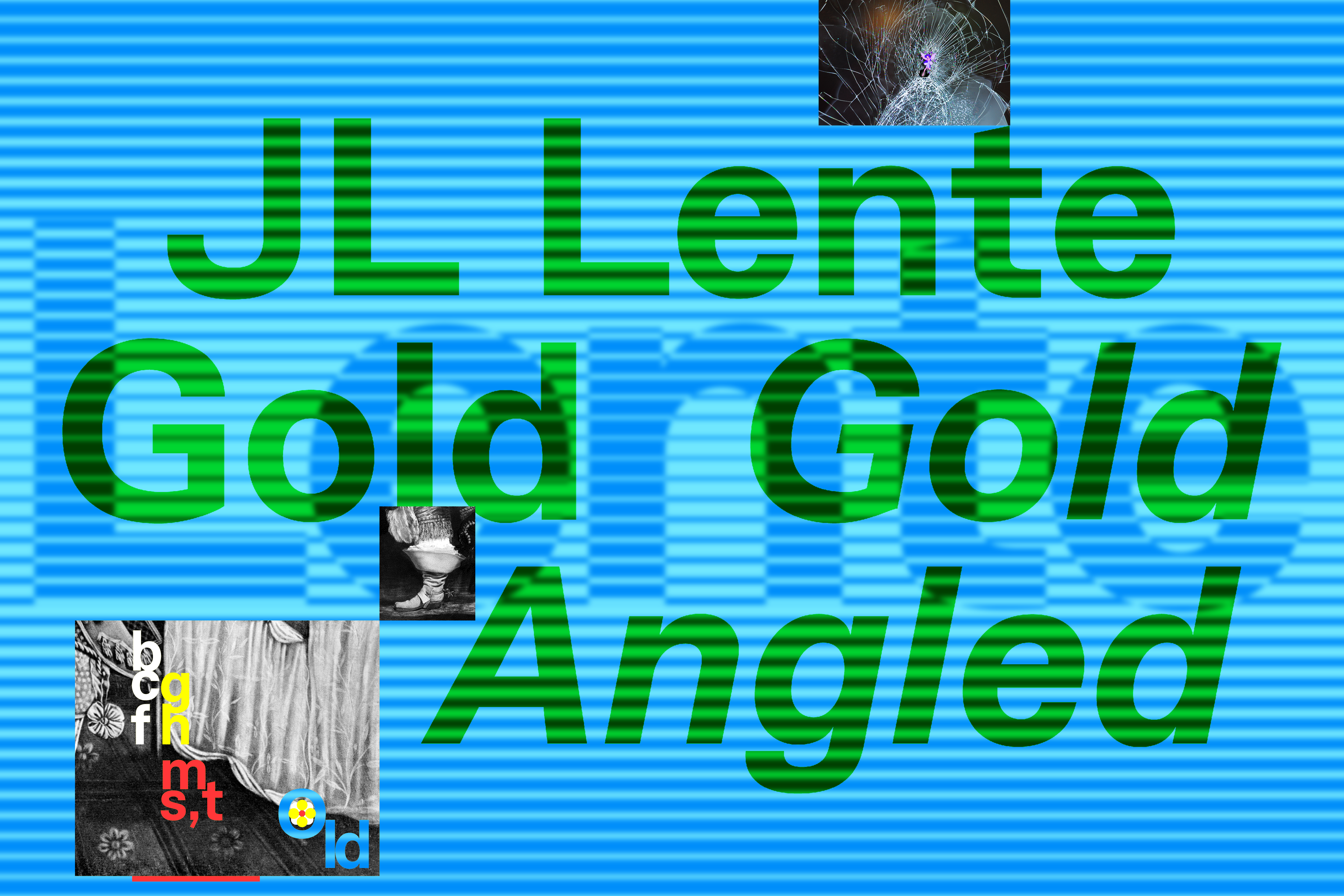
Bold,
Cold,
Fold,
Gold

Hold
.
Mold
.
Sold
?
Told
!
The text below is excerpted from
Through the Eyes of Descartes
written by Cecilia Sjholm and Marcia S Cavalcante Schuback
Such desire derives from an unknown origin that can be traced back to an archaic prehistory of the body.
This archaic prehistory has the potentiality of coloring all aesthetic experience with a certain ambiguity, even with a certain potentiality of violence. It can make the beautiful appear as miraculous, but also haunting. It can make the ugly be experienced not only as the opposite of the beautiful but also as a direct threat to mind and body.
Distinct rhythms are used in dance,
where
the motion of our bodies
is
“naturally impelled by the music”—we are stricken by “sounds on all sides.”
This immersion carries its own moods: a faster rhythm creates joy;
a slower rhythm invokes fear, sadness, and so on. In addition, rhythm (time) creates a sense of pleasure in itself: a wish to dance, to enjoy. Music affects the body.
The experience of pleasure that derives from music has to do with a complex interaction between ideas and sensibility. The way in which tones and rhythms are perceived is associated with ideas. This has most often been interpreted as having to do with taste. But whether we enjoy dancing depends not so much on a free-floating imagination as on traces inscribed in the body—memories evoked by music. Music attaches to the visceral domain of the body, to its inside. The joy, pleasure, sublimity, or memory of music has nothing to do with any transcendental emotive sphere beyond language. The passions evoked by music are aroused through a complex system of tubes and traces that attaches body and brain to one another.
The text below is excerpted from
Rain
written by Francis Ponge
Rain, in the courtyard where I watch it fall, comes down at very different speeds. At the center it is a sheer uneven curtain (or net), an implacable but relatively slow descent of fairly light drops, an endless precipitation without vigor, a concentrated fraction of the total meteor. Not far from the walls to the right and left, heavier individuated drops fall more noisily. Here they seem the size of wheat kernels, there large as peas, elsewhere big as marbles.
The pealing of the vertical jets on the ground,
the gurgling of the gutters,
the tiny gong strokes,
multiply and resound together in a concert
neither monotonous
nor unsubtle.
The text below is excerpted from
Through the Eyes of Descartes
written by Cecilia Sjholm and Marcia S Cavalcante Schuback
On February 4, 1635, Descartes writes, I walked on the streets of Amsterdam and observed first the formation of the evening frost and then the fall of hail. The last particles had “six tiny teeth,” like “wheels of clocks,” “very white, like sugar, whereas the grains, which seemed to be of transparent ice, seemed to be nearly black.” He walks out again the next morning and observes, to his great astonishment, a kind of snow “of which I have never heard anyone speak”: it is
composed of small blades . . .
completely flat, highly polished and very transparent.
He spends days observing—and indulging in—a severe storm that shifts between snow and hail, marveling at the infinite variety of size, formation, and shape of the blizzard, speculating on its relation to clouds, winds, and temperature and on the origin and regularity of the patterns.

Valse Lente (Slow Waltz)
Snow – Slow – Slew – Slow – Snow
